
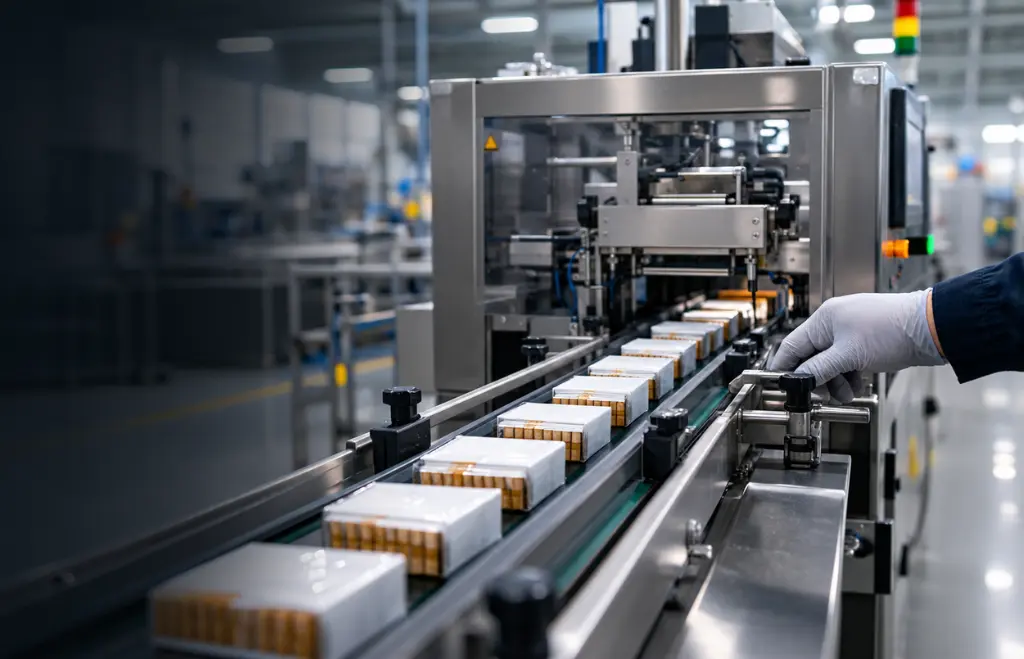
How to Choose the Right Cigarette Packing Machine for Your Production
Two packing machines can carry the exact same rated speed on their spec sheets and still perform completely differently once they're actually running your product. One holds that number for a full eight-hour shift without drifting. The other hits it for twenty minutes under test conditions and settles lower once real production tobacco, real humidity, and real operator fatigue enter the picture. The number on paper is where the conversation starts, not where it ends.
Start With What You Actually Need to Produce, Not What's Available
It's tempting to look at our HLP range, see the HLP-225 sitting at the top with the highest rated speed, and assume that's the smart buy. For a lot of factories, it isn't. If your current output sits comfortably within what the HLP-180 or HLP-200 can handle, the 225 gets you nothing but a bigger invoice and a machine running well under its capability every single shift. That unused headroom doesn't come back to you later as savings. It's just money spent on a number you never needed.
The better question isn't "which machine is fastest." It's "what does my line actually produce today, and how much room do I realistically need for growth in the next year or two, not the next decade." A packing machine bought two tiers above your current need is a common and expensive mistake, and it's one that's easy to avoid just by being honest about your numbers before you shop.
The Gap Between a Spec Sheet and a Real Shift
Here's something worth internalizing before you compare any machines: a rated speed is usually measured under close to ideal conditions, short runs, controlled temperature, fresh tooling. Your factory floor won't offer any of that consistently. So the number that actually matters is what a machine sustains across a full production day, not what it hits in a demo video.
Ask the seller directly: what does this machine's output look like six hours into a shift? Does it hold, or does it taper off as components warm up or wear settles in? A machine that can genuinely hold its rated speed hour after hour is a fundamentally better piece of equipment than one that only reaches that number in short bursts, even if both are advertised identically.
Packet Formats: The Flexibility You See vs. the Flexibility You Get
Every HLP machine we carry can be set up for round corner, bevel edge, D-type, or square packets. On paper, that reads as total flexibility. In practice, it isn't quite that simple. A machine currently tooled for round corner packs doesn't switch to square packs with the flip of a switch. Someone has to physically reconfigure it, and depending on the platform and the specific parts involved, that can range from a quick adjustment to a genuine downtime event.
If your factory has committed to one pack style and isn't planning to change, this whole question matters less. But if you're running multiple formats, or you expect to add one, ask specifically: what does switching from the current setup to a different packet style actually involve here? How long does it take, and does it need a technician or can your own operators handle it? Don't let "supports four packet styles" on a spec sheet stand in for an actual answer.
Your Packer Doesn't Work Alone
It's easy to evaluate a packing machine as a standalone purchase, but it never operates that way. It sits between your cigarette manufacturing machine, which feeds it a constant stream of loose cigarettes, and your wrapping and boxing stage, which takes whatever it produces and finishes the job. If any of those three don't talk to each other properly, speed becomes irrelevant.
Before you commit to a specific unit, physically check how it would connect on both ends. What height is the feed conveyor, and does that match your maker's output? Which direction does the output conveyor run, and does that line up with where your wrapping stage sits on the floor? A packer that's individually excellent but physically mismatched to your existing line creates new problems instead of solving the one you set out to fix. And a packer that's faster than your maker doesn't help you at all. It just sits there waiting, which is a strange thing to pay a speed premium for.
Compliance Requirements Can Sneak Up on You
This is one that catches people off guard. Depending on where you're distributing, your packing stage might need to support tax stamp application, or serialization features for track-and-trace compliance. These aren't universal across every market, so they might genuinely not apply to your situation. But if they do, and you find out after the machine's already installed, retrofitting compliance features onto equipment that wasn't built for them is a far more expensive and disruptive fix than asking the question upfront ever would have been. If your operation has any labeling, stamping, or traceability obligations, put that on the table during the buying conversation, not after.
The Parts You'll Actually Wear Out
Every machine has a general spare parts question, and we've written about how to evaluate spare parts availability in more depth elsewhere. But packing machines specifically tend to wear through a predictable set of components over time: folding tools, gluing nozzles, cam followers, and the main drive belts. These aren't exotic parts, but they are the ones you'll eventually need, so it's worth asking a seller directly which of these they can actually supply and how long it takes to get them. A machine that's mechanically sound today but backed by a seller with no real parts pipeline is a problem waiting for its moment, not a safe purchase.
What to Actually Do Before Buying a Used Unit
If you're buying used rather than new, a handful of concrete steps separate a good purchase from a regretted one.
Get a video of the machine running at its stated speed, not just powered on and idling. Static photos and a machine sitting still tell you almost nothing about how it actually performs.
Ask for its running hours and whatever service history exists on paper. A machine with no documented past is one you're buying on faith, no matter how clean it looks in photos.
Treat a suspiciously low price as a question, not a bargain. When a quote sits well below what comparable machines at the same speed and configuration are going for, there's usually a reason, and it's rarely a reason in your favor.
And if a trial run is offered, take it. Skipping that step to save half a day is one of the most common regrets buyers mention after the fact.
Putting the Whole Picture Together
None of these factors decide anything on their own. A fast machine that doesn't physically connect to your line the way you need it to isn't actually fast for your purposes. A flexible machine bought for format-switching you'll never do is money spent on a feature that sits unused. The buyers who end up satisfied are the ones who got specific about their own production first, then matched a machine to that reality, rather than working backward from the most impressive number on a brochure.
When you're ready to look at real options, our cigarette packing machines range lists rated speed, plunger type, and current packet setup for the HLP-180, HLP-200, and HLP-225, so you can compare against your own numbers directly.
Frequently Asked Questions
What's the single biggest mistake buyers make when choosing a packing machine?
Can one HLP machine really handle all four packet styles equally well?
What packing-machine-specific spare parts should I be asking about?
Does my packing machine need to match my manufacturing machine's speed exactly?

Looking for Cigarette Machinery?
Browse our current inventory of manufacturing, filter making, packing, and wrapping equipment, or send us your target speed and format for a fast quote.